The Energy Test: Why Love and Obsession Matter More Than Skills
My Obsession with Success
I’ve been obsessed with success.
I’ve read biographies of successful people, studied business books, and tried to learn everything I could about success principles.
Because I was obsessed with success and I wanted to be successful, I thought the way to do it was through acquiring the skills I thought were necessary.
I believed that in order to be successful, you had to be good at sales, marketing, leadership, storytelling, charisma, and confidence.
So I deliberately went out and tried to acquire all of those skills.
For a long time, I believed that if I just learned enough skills, I’d eventually be successful.
But what I didn’t account for was something much simpler.
What Successful People Actually Do
When I look at the people I admire, they rarely sat down with the intention of mastering every skill.
They didn’t start by learning how to market or how to lead before diving in.
Instead, their stories usually sound like this: they found something they were interested in.
Because they loved it, they dedicated massive amounts of time to it.
Along the way, they picked up the skills they needed.
It wasn’t “learn skills first, then go build something.”
It was “fall in love with the thing, and the skills come naturally.”
The Reality of Hard Work
We’ve all heard the stories.
Mark Zuckerberg was a genius, so he coded Facebook.
Steve Jobs was a genius, so he built Apple.
Elon Musk was a genius, so he created Tesla and SpaceX.
The narrative always seems to be: they succeeded because they were different, smarter, or uniquely gifted.
But what hits me more is that behind what looked like “genius” was something much simpler—an insane amount of work and time.
What actually made them geniuses in the first place was the amount of deliberate effort they put in over years.
For example, two people I’ve been following for a while—two business mentors of mine—are Alex Hormozi and Sam Ovens.
I’ve studied their work, learned from their content, and even had the chance to meet Alex at one of his events.
In one interview, Alex Hormozi talked about the insane amount of preparation he put into a single launch that made $100 million in one day.
It wasn’t luck.
It wasn’t some magical genius moment.
It was months of writing, planning, and grinding to make that launch happen.
In another interview, Sam Ovens shared how he’s worked about 12 hours a day, six days a week, for over 10 years.
That level of consistency and intensity seems crazy to me, but it isn’t about a “genius gift.”
It’s about insane focus and time.
That’s the reality.
What looks like genius from the outside is really just the insane amount of work these people are putting in.
Redefining Work
For years, I thought work meant pain.
I thought it meant grinding away at things you hated for long stretches of time.
But that doesn’t make sense anymore.
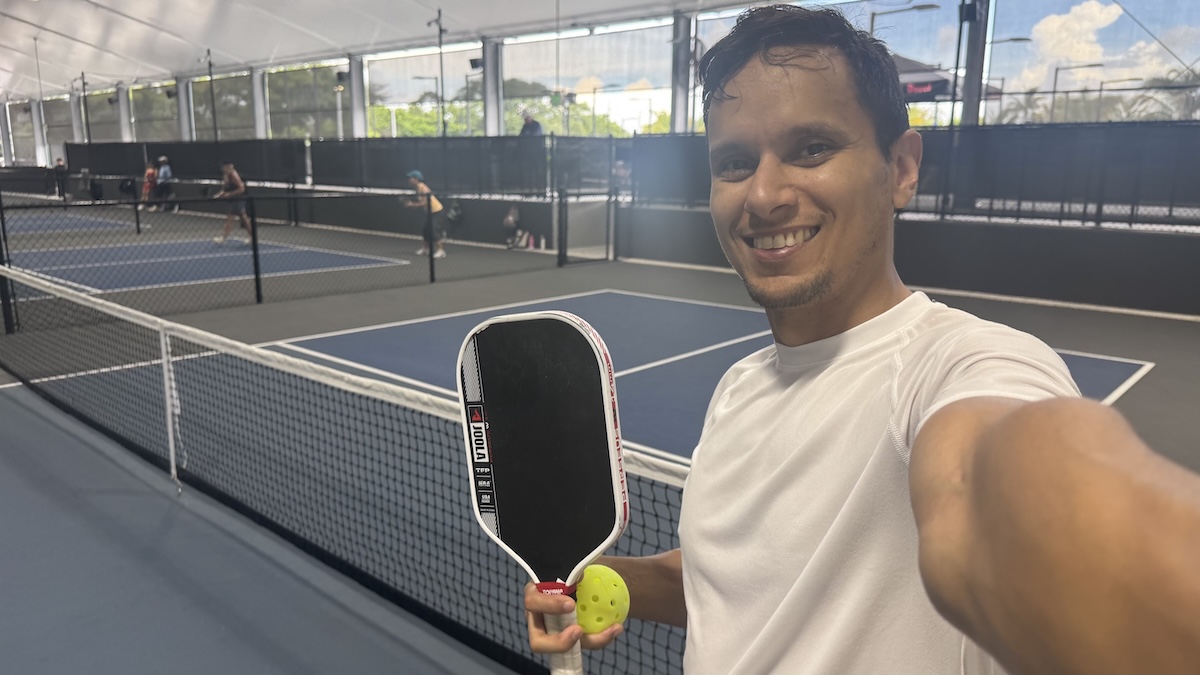
When I play pickleball, hours fly by without me noticing.
Same thing back when I played Tibia, this MMORPG I was obsessed with.
I would spend 14 hours a day on it in the summer.
I didn’t need discipline to do that.
I just wanted to.
That’s the same reason people like Hormozi or Ovens can work 12-hour days for years: they love it.
Love Comes First
I once read that Michael Jordan would frequently get parents coming up to him asking, “What drills should my kid do to be the next Mike? What moves should they work on? What skills should they practice?”
These parents wanted the formula.
They were looking for the exact set of drills, routines, and skills that would turn their kid into the perfect player.
And Michael’s answer was simple: “First, they have to love the game.”
Because if they love the game, the drills, the routines, and the training will come naturally.
If they don’t love it, they won’t stick with it.
That’s the mistake these parents were making.
They thought they could somehow deliberately assemble the perfect athlete—get the right strength training, the right conditioning, the right technical skills—and piece it all together into a superstar.
But that’s not how it happens in reality.
Michael didn’t start by "grinding", and "putting in the work" to acquire the skill of learning how to shoot, then separately learn how to run fast, then separately learn how to jump high, then separately learn how to defend, and only then, later learning to put it together and finally enjoy playing basketball.
That's not how it happened.
He loved the game first.
The love came before the skills.
And because he loved it, he wanted to get better, so he put in the hours on the drills.
It wasn’t that he forced himself to hate the work until he got good enough to enjoy it.
It was the love of basketball that gave him the energy to do the hard work, focus on the drills, and push himself.
The love is what made the work possible.
Obsession and Progress
If you want to be great at something, you need to find something you can obsess over.
I saw a video of a kid teaching himself boxing over three years with no coaches—just YouTube and practice.
He made incredible progress because he became obsessed, even if he didn't have much guidance.
That’s how it works: obsession fuels time spent, and time spent fuels progress.
Competing at the Highest Level
You can’t compete with someone putting in 12 hours a day if you’re only doing two.
And you’ll never sustain 12 hours a day unless you love it.
If you want to create something extraordinary, you need to find work that feels like play—where time flies, where you have energy afterward instead of being drained.
The Energy Test
So here’s the exercise I’ve been doing—and what I want to leave you with:
Look at your life. Look at your schedule, your activities, the people you spend time with.
Notice what makes time fly.
Notice what leaves you with energy instead of draining you.
Those are the signs.
That’s the work worth doing.
For me, I’m trying to shape my role in my company so it feels like pickleball—something I can get lost in for hours.
That’s the only way I believe I’ll create something great.